

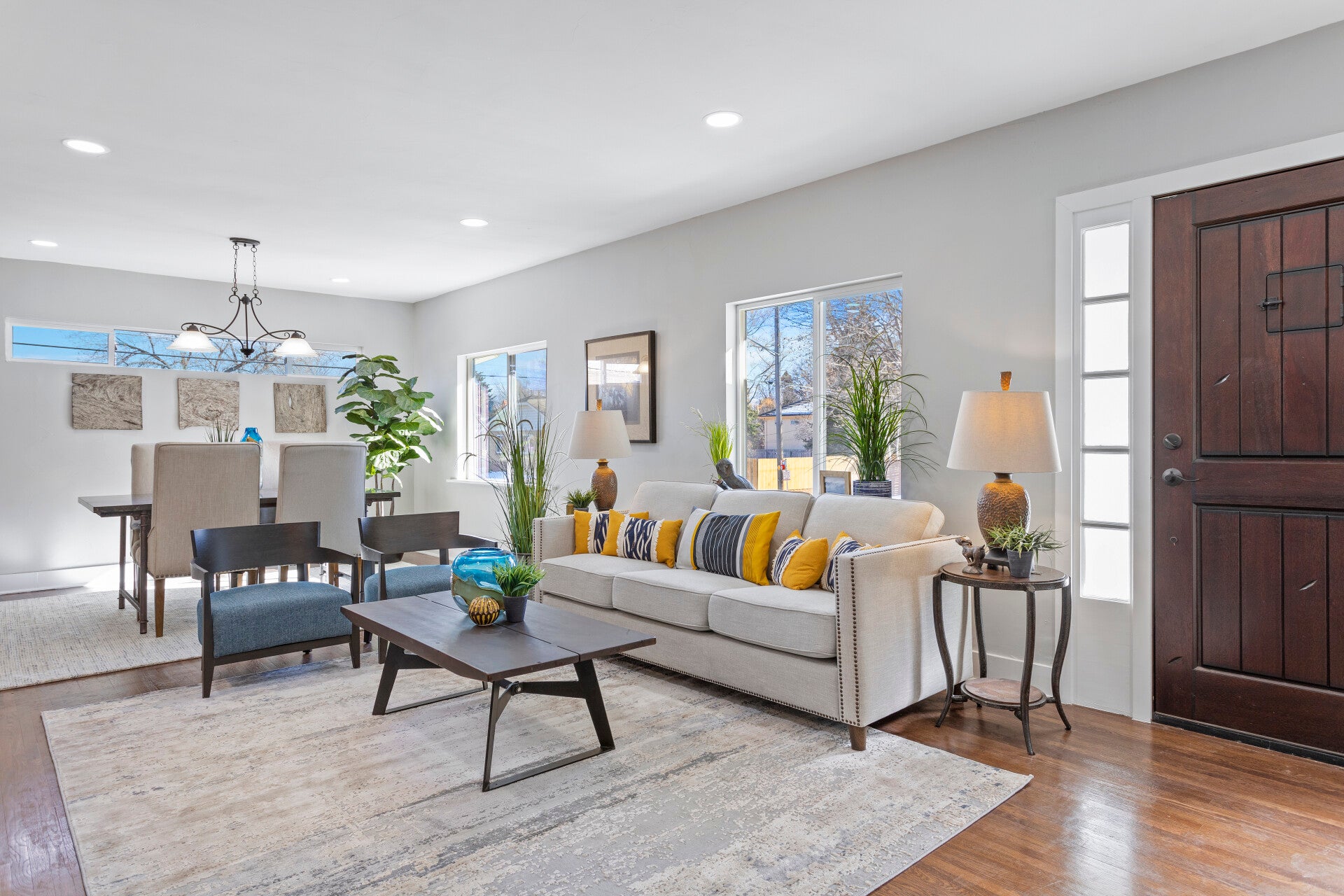
As a Certified Staging Professional®, there's a conversation I occasionally have with Realtors that goes something like this: "The home didn't sell in the first 30 days, so we're going to remove the staging." I understand the reasoning. The seller wants to reduce expenses. The listing has been on the market longer than expected. Showing activity may have slowed. Perhaps the market has shifted. But here's the question I always ask: if the home hasn't sold yet, why would you remove one of the marketing tools that is helping it compete? In many cases, removing staging after 30 days can actually make it harder to sell the property — not easier.
The Home Is Still Competing
A common misconception is that staging is only important during the first few weeks on the market.
In reality, the home continues competing against every new listing that hits the market. Every day. Every week. Every month.
The moment staging is removed, the property loses one of its strongest competitive advantages.
New listings enter the market looking fresh, updated, and move-in ready. Meanwhile, the previously staged home suddenly appears empty, less inviting, and potentially less valuable.
The home may be the same, but buyers' perception of it often changes dramatically.
Most Buyers Never Saw the Home During the First 30 Days
Think about how buyers enter the market.
New buyers begin their home search every single day. The buyer who ultimately purchases the property may not have even been looking during the first month the home was listed.
Removing staging assumes that everyone who was going to see the home has already seen it. That's simply not true.
Every new showing deserves the same opportunity to create a strong first impression as the very first showing.
Empty Homes Feel Different
One of the biggest challenges with vacant properties is that buyers often struggle to connect emotionally.
A staged home feels warm. A staged home feels welcoming. A staged home helps buyers imagine how they would live in the space.
An empty home often feels exactly what it is: empty.
Once the furniture is removed, rooms may suddenly feel:
- Smaller
- Colder
- Less functional
- Less memorable
The emotional connection that staging helped create disappears. And when buyers fail to form an emotional connection, they're less likely to make an offer.
Buyers Don't Care How Long the Home Has Been Listed
This is an important point.
Buyers don't walk through a property and think: "This home has been staged for 30 days already, so it probably doesn't need staging anymore."
They simply compare what they see.
If they tour two similar homes and one is beautifully staged while the other is vacant, which one is likely to leave a stronger impression? The answer is obvious.
The fact that a property has been listed for 30, 60, or even 90 days doesn't make presentation any less important. In fact, presentation may become even more important as competition increases.
Reduced Showing Activity Is Often a Reason to Keep Staging — Not Remove It
When showing activity slows, many sellers immediately look for ways to cut expenses.
But consider this: if fewer buyers are coming through the door, every showing becomes even more valuable.
When traffic is limited, presentation matters more than ever. The goal should be to maximize the impact of every buyer who walks through the property.
Removing staging may reduce costs, but it can also reduce buyer engagement and diminish the home's ability to stand out from competing listings.
Staging Continues Working Long After Photography Day
Some people view staging as something that's only needed for listing photos.
While great photos are certainly important, staging serves a much larger purpose. It helps with:
- In-person showings
- Open houses
- Buyer perception
- Room functionality
- Emotional connection
- Perceived value
Every buyer who visits the property experiences the benefits of staging firsthand. That's something photographs alone cannot accomplish. A beautifully staged home creates consistency between what buyers see online and what they experience in person.
Consider the Cost of a Price Reduction
Let's put things into perspective.
Many sellers hesitate to continue staging because of monthly rental fees. On the surface, removing staging may seem like an easy way to save money.
But compare that expense to the cost of a price reduction.
A typical staging extension may cost only a few hundred dollars per month. A price reduction, on the other hand, is often measured in thousands — or even tens of thousands — of dollars.
For example:
- Three additional months of staging may cost less than $1,000.
- A single $10,000 price reduction costs ten times that amount.
- A $20,000 price reduction could equal years of staging rental fees.
When sellers remove staging to save a relatively small monthly expense, they may inadvertently weaken one of the very tools helping buyers connect with the property. The reality is that staging is often one of the least expensive marketing investments associated with selling a home. If maintaining the staging helps attract the right buyer and avoid even one price reduction, the return on investment can be substantial. Instead of asking "How much does continued staging cost?" a better question may be: "How much could it cost if the home becomes less competitive without it?" After all, reducing a home's price by thousands of dollars to save a few hundred dollars in staging rarely makes financial sense.
The Realtor's Role: Protecting the Listing's Marketability
As Realtors, our goal is to help sellers make informed decisions that maximize their opportunity for success.
When a listing isn't selling, it's natural to evaluate pricing, condition, marketing, and market conditions. But removing staging should be approached carefully.
Ask yourself:
- Has the home become less competitive?
- Will it show as well without staging?
- Will buyers connect emotionally with an empty property?
- Does removing staging improve the home's appeal — or simply reduce an expense?
The answers often point in the same direction.
The Bottom Line
Staging isn't just a launch strategy. It's an ongoing marketing strategy.
The home doesn't stop competing after 30 days. Buyers don't stop comparing properties after 30 days. And presentation doesn't stop mattering after 30 days.
If a staged home hasn't sold yet, removing the staging may actually eliminate one of the very things helping it stand out from the competition.
Before deciding to pull staging, consider whether saving a small monthly expense could unintentionally make it harder to achieve the seller's ultimate goal: getting the home sold.
In many cases, the cost of continuing to stage a home is far less than the cost of a price reduction.
For Realtors who are committed to helping their sellers maximize value, staging should be viewed not as a temporary expense, but as an ongoing marketing investment that continues working until the home is sold.
Keep Your Listing Competitive — Even on Day 60
If your listing has been on the market longer than expected, removing staging often costs more than it saves. Let's talk about strategies to keep the home competitive, fresh, and emotionally appealing to every new buyer who walks through the door. Contact HD Home Staging & Design today.